Table Of Contents
- Understanding Laparoscopic Cholecystectomy Surgery
- How to Prepare for Your Laparoscopic Cholecystectomy Surgery
- The Day of the Procedure
- Recovery

Download Patient Guide
Download the patient guide for Laparoscopic Cholecystectomy Surgery.
 Download
Patient Guide


This booklet will take you through Laparoscopic Cholecystectomy Surgery.
We want to ensure that you receive the highest level of healthcare. This means keeping you educated and informed about what is involved in the different stages of your Laparoscopic Cholecystectomy Surgery. If you have any questions or concerns, please speak with your doctor or medical team.
Understanding Laparoscopic Cholecystectomy Surgery
Laparoscopic Cholecystectomy is a minimally invasive surgical procedure used to remove the gallbladder. The gallbladder is a small organ located beneath the liver that stores bile, a digestive fluid produced by the liver. Gallbladder removal is typically recommended for patients with symptomatic gallstones, gallbladder inflammation (cholecystitis), or other gallbladder diseases.
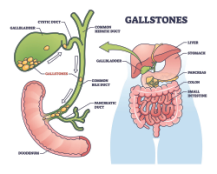
Laparoscopic Cholecystectomy offers several advantages over traditional open gallbladder removal surgery, including smaller incisions, shorter hospital stays, faster recovery time, and reduced post-operative pain. However, not all patients are suitable candidates for laparoscopic surgery, and the decision to perform this procedure depends on factors such as the patient’s overall health, the presence of complicating factors, and the surgeon’s expertise.
How to Prepare for Your Laparoscopic Cholecystectomy Surgery
Your doctor will advise you to:
-
1
Do pre-operative blood tests, an electrocardiogram (ECG), and scans.
-
2
Have a Pre-Anaesthesia Check-up Appointment (PAC) with the anaesthetist, who will inform you when you are to stop eating and drinking and if there is a need to do any further investigations before the procedure.
-
3
Avoid blood thinners 3 to 5 days before the surgery. Speak to your doctor to confirm timing.
-
4
Follow specific instructions about if and when to take your insulin or other diabetic medication if you have diabetes.
-
5
Take all other medications as usual with small sips of water on the morning of your procedure.
-
6
Leave your jewellery and other valuables at home.
-
7
Bring a current list of medications and allergies with you to the hospital.
-
8
Bring your government-issued identification.
-
9
Ensure you have someone to drive you home after your procedure and to help you at home with everyday tasks such as cooking, bathing, and laundry.
The Day of the Procedure
Make sure that you do not eat anything and follow the instructions given by the anaesthetist regarding your routine medications.
STEP 1
You will be admitted 60 minutes before your procedure unless otherwise advised by the patient care coordinator. After check-in, a healthcare provider will lead you to a room where you can change into a hospital gown. A nurse will check your vitals such as blood pressure, pulse, and oxygen, and place an IV line in your arm to begin delivering fluids. From there, you will be taken inside the operating room for your procedure.
STEP 2
The anaesthetist will give you a general anaesthetic, to ensure you are unconscious and pain-free during the procedure. The surgical team prepares your abdomen by cleaning and sterilising the area around the surgical site.
STEP 3
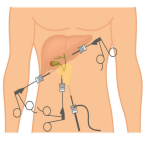
The surgeon makes several small incisions (usually 0.5 to 1.5 cm in length) in the abdomen, typically around the belly button and upper abdomen. Trocars, which are hollow tubes with valves to prevent air leakage, are inserted through these incisions. These trocars serve as ports for the laparoscope and surgical instruments. Carbon dioxide gas is gently pumped into the abdomen through one of the trocars. This creates a space inside the abdominal cavity, allowing the surgeon to see and access the organs more easily.
STEP 4
A laparoscope, which is a thin tube with a camera and light source attached to it, is inserted through one of the trocars. The camera sends real-time images of the inside of the abdomen to a monitor in the operating room, allowing the surgeon to visualise the gallbladder and surrounding structures. The surgeon carefully identifies the gallbladder and surrounding structures, including the cystic duct and cystic artery. Specialised surgical instruments are used to dissect and separate the gallbladder from its attachments to the liver and surrounding tissues. The cystic duct, which connects the gallbladder to the common bile duct, is clipped and cut to separate the gallbladder from the bile duct system. Similarly, the cystic artery, which supplies blood to the gallbladder, is clipped and cut to disconnect the blood supply to the gallbladder.
STEP 5
Once the cystic duct and artery have been secured, the surgeon removes the gallbladder from the abdomen through one of the small incisions. In some cases, the gallbladder may need to be fragmented or suctioned out if it cannot be removed intact. Once the gallbladder has been removed, the surgeon checks for any bleeding and ensures that the incision sites are properly closed. The trocars are removed, and the small incisions are closed with sutures or surgical glue.
STEP 6
After surgery, you will rest in a recovery area for a short time before being taken back to your hospital room. You will likely stay in the hospital overnight. However, your surgeon will discuss with you before your surgery how long you are expected to stay in the hospital; this all depends on your individual needs. Your care team will need to ensure that all is stable before you are discharged by checking that: your vital signs are within an acceptable range; your pain is manageable, and you do not feel nauseous; you can get out of bed and stand up from a chair without assistance.
Recovery
The recovery timeline for Laparoscopic Cholecystectomy Surgery can vary depending on factors such as individual healing ability, and any complications that may arise during or after the procedure.
| Timeline | Recovery/Activity |
| Immediate Post-Surgery -Days 1-2 | After the surgery, you'll spend some time in the recovery room as the effects of anaesthesia wear off and your vital signs stabilise. You may experience some pain or discomfort around the incision sites or in your abdomen. Pain medications will be provided to help manage any discomfort. You’ll be encouraged to start moving around as soon as possible to prevent blood clots and aid in the recovery process. Most patients are discharged from the hospital on the same day of surgery or within 24 hours. |
| Week 1 | During the first week after surgery, you'll need to take it easy and avoid strenuous activities. You may experience some fatigue, nausea, or bloating as your body adjusts to the absence of the gallbladder and the effects of surgery. It's important to follow your surgeon's instructions regarding diet and activity level during this time, which may include gradually reintroducing solid foods and avoiding heavy lifting or vigorous exercise. |
| Weeks 2-3 | Pain and discomfort should gradually improve during the second and third weeks after surgery. You may be able to resume light activities and return to work, depending on the nature of your job and how you're feeling. It's normal to experience some residual soreness or stiffness around the incision sites, but this should continue to improve over time. |
| Weeks 4-6 | By this time, most patients are feeling much better and experiencing minimal to no pain or discomfort. You can gradually increase your activity level and start to resume normal daily activities, including exercise and household chores. Follow-up appointments with your surgeon may be scheduled during this time to monitor your progress and ensure that you're healing properly. |
| Months 3-6 | Most patients are fully recovered from Laparoscopic Cholecystectomy surgery by three to six months post-surgery. Any residual symptoms, such as mild digestive issues or changes in bowel habits, should continue to improve over time. It's essential to continue to follow any dietary recommendations provided by your healthcare provider and to listen to your body, avoiding activities that cause discomfort or pain. |
It’s important to note that this timeline is a general guideline, and individual recovery experiences may vary. Be sure to follow any specific instructions provided by your surgeon and seek medical attention if you experience severe pain, swelling, fever, or any other concerning symptoms during your recovery.