Your Barium X-ray Journey
 Download PDF
Download PDF
Your Barium X-ray Journey
This guide explains what a Barium X-ray is, how to prepare for it, and what to expect before, during, and after the procedure. We want to ensure you feel supported through every phase of this diagnostic procedure. If you have any questions, please speak with your doctor or radiology team.
Understanding Barium X-rays
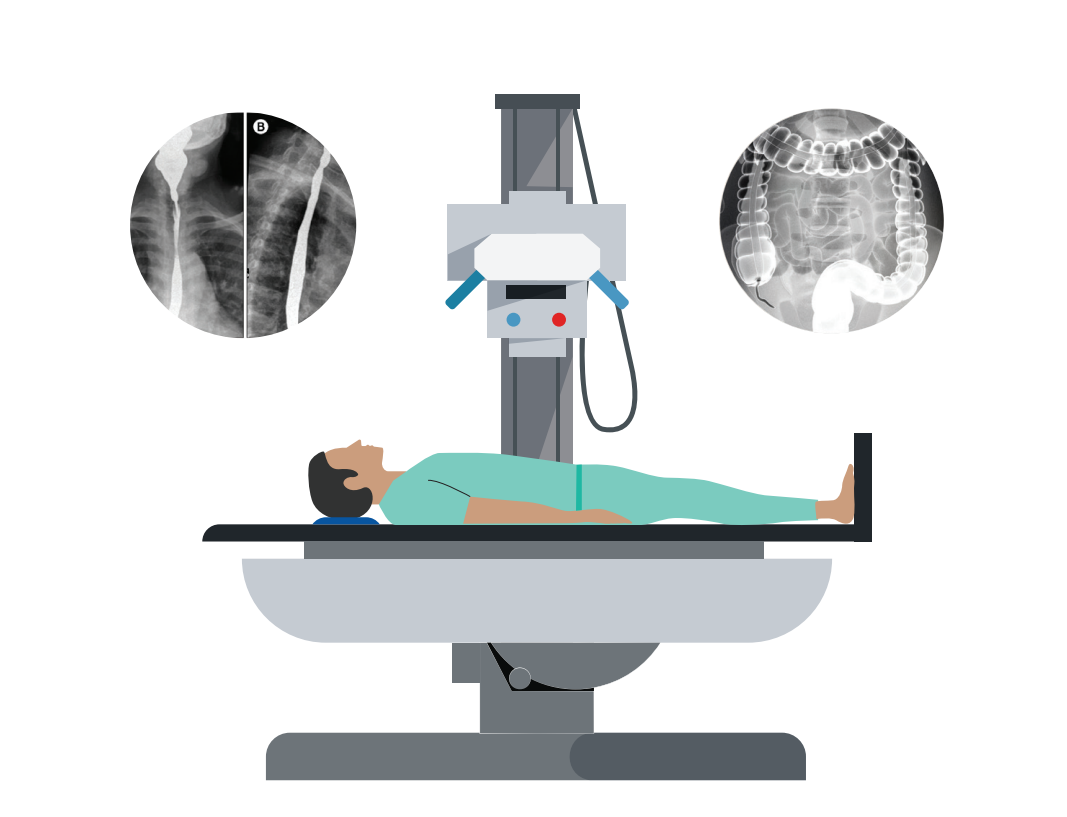
A Barium X-ray is a special imaging test that uses a barium contrast material to highlight parts of your digestive system so they can be clearly seen on X-ray images. Barium coats the lining of your oesophagus, stomach, or intestines, helping to diagnose conditions such as:
- Difficulty swallowing (dysphagia)
- Persistent heartburn or reflux
- Ulcers
- Polyps or tumours
- Narrowing or blockages in the digestive tract
- Chronic diarrhoea or constipation
- Unexplained abdominal pain or bleeding.
There are several types of Barium X-rays, depending on which part of your digestive tract is being examined.
- Barium swallow – for the oesophagus and throat
- Barium meal – for the stomach and small intestine
- Barium enema – for the large bowel (colon and rectum)
Your doctor will explain which test you are having and why.
How to Prepare for Your Barium X-ray
Preparation depends on which part of your digestive tract is being examined.
For Barium Swallow or Meal:
- Do not eat or drink anything for at least 4 hours before the Test.
- Avoid smoking and chewing gum before the Test, as this may affect the results.
- Inform your doctor if you are pregnant or
breastfeeding. - Bring a list of your current medications. You may be asked to stop certain medicines
temporarily.
For Barium Enema:
- You may be given a special diet to follow 1–2 days before the Test.
- Laxatives or enemas may be provided to empty your bowels.
- Drink plenty of fluids unless advised otherwise.
- For accurate results, carefully follow all instructions given to you.
What to Expect on the Day
Before the Procedure:
For Barium Enema:
- You will be asked to change into a hospital gown and remove any metal items.
- A radiographer will explain the test and ask about allergies or existing conditions.
- You may be asked to drink a barium solution (for swallow/meal) or have it introduced via a tube (for enema).
During the Procedure:
- X-rays are taken as the barium moves through your digestive tract.
- You may be asked to change positions, hold your breath, or lie on a tilting table.
- The Test usually takes 15–60 minutes, depending on the area being examined.
After the Procedure:
- You can usually go home shortly after the Test.
- You may resume eating and drinking unless told otherwise.
- Drink plenty of fluids to help flush the barium from your system.
- Your stools may appear white or pale for a few days—this is normal.
Aftercare and Recovery
Do:
- Drink extra water over the next 1–2 days.
- Eat high-fibre foods (e.g., fruit, vegetables, whole grains) to prevent constipation.
- Resume regular medications unless otherwise advised.
Don’t:
- Worry if your stools are light in colour for a few days.
- Ignore ongoing constipation—contact your doctor if you don’t have a bowel movement within 2–3 days.
Frequently Asked Questions
Other Patient Pathway Posts
Pulmonary Embolism

What to Expect After a Head Injury

Recovering After A Concussion
How to Care for a Child Who Has Croup

Choking: What You Can Do to Help

Understanding Your Headache & When to Seek Help
Understanding Burns
Recognising the Red Flags of Cauda Equina Syndrome
Recovering After Cauda Equina Syndrome
Recovery From Back Pain