Download Patient Guide


Our goal is to ensure you feel informed, comfortable, and supported throughout your imaging experience. If you have any questions, please speak with your referring doctor or the nuclear medicine team.
What Is a Bone Scan?
A Bone Scan is a type of nuclear medicine imaging test used to evaluate your bones for injury, infection, inflammation, or cancer. It involves the injection of a small amount of radioactive tracer, which highlights areas of abnormal bone activity on special imaging cameras.
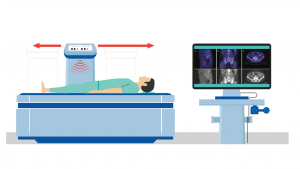
There are two main types:
- Whole Body Bone Scan: A general overview of your entire skeleton
- Three Phase Bone Scan: A more detailed study of a specific area (e.g., foot, hip, or knee), done in three imaging phases to assess blood flow and bone activity
Why You May Need a Bone Scan
Your doctor may request a Bone Scan to investigate:
-
1
Unexplained bone pain
-
2
Suspected fractures (especially if not visible on X-rays)
-
3
Bone infections or inflammation (e.g., osteomyelitis)
-
4
Arthritis or joint prosthesis complications
-
5
The Scan helps identify abnormalities that may not be visible on other imaging like an X-ray or MRI.
How to Prepare for Your Scan
Please follow these general preparation guidelines:
- Hydrate well on the day of the scan unless otherwise advised
- Take your usual medications unless told otherwise by your doctor
- Inform the team if you:
- Are pregnant or breastfeeding
- Have difficulty lying flat
- Have mobility issues or incontinence
- Have had a recent nuclear medicine scan
There is no need to fast for this Scan. You may eat and drink as normal.
What to Expect on the Day
STEP 1: Arrival and Check-In
Please arrive 15 minutes early and check in at the front desk. A member of our nuclear medicine team will meet you and escort you to the nuclear medicine department.
STEP 2: IV Line and Tracer Injection
A nurse will insert an IV cannula into your arm for the injection of a small amount of radioactive tracer. This is not a dye or contrast and has no side effects.
STEP 3: Waiting Period
You will be asked to wait for 2–4 hours to allow the tracer to circulate and absorb into your bones. During this time, you may be asked to drink plenty of fluids and remain nearby.
STEP 4: The Scan
You will lie on a scanning bed while a special camera slowly moves over your body. The Scan is painless and typically takes 30–45 minutes. Three Phase Scans may include earlier imaging immediately after injection and then again a few hours later.
After the Scan
-
1
A nurse will remove the IV line from your arm.
-
2
You may return to normal activities right away.
-
3
Drink plenty of fluids for the next 24 hours to help flush out the tracer.
-
4
You may be slightly radioactive for a short time, but the dose is very small and safe. Avoid close, prolonged contact with young children or pregnant individuals for the rest of the day as a precaution.
-
5
Results will be sent to your referring doctor, usually within 1–3 working days.
Frequently Asked Questions
You may feel a small pinch with the injection, similar to a blood test. Most people find it very tolerable.
A: Yes. The amount of radiation used is very small – less than a CT scan – and the tracer passes naturally out of your body in your urine.
No. You can drive yourself home and carry on with your day.
Please inform the team beforehand. The Scan is usually postponed if you are pregnant unless essential.
Wear comfortable clothing and remove any metal objects or jewellery before the Scan.