Your Breast Reduction Journey
 Download PDF
Download PDF
Your Breast Reduction Journey
We are committed to providing the highest standard of care. That means keeping you informed and supported at every step of your breast reduction journey. If you have any concerns or questions, please speak to your doctor or care team.
Understanding Reduction Mammaplasty
Reduction Mammaplasty (commonly known as breast reduction) is a surgical procedure that removes excess breast tissue, fat, and skin to achieve a breast size more in proportion with your body and to alleviate physical discomfort.
It is commonly performed to help with:
- Chronic back, neck, or shoulder pain
- Skin irritation beneath the breasts
- Shoulder grooving from bra straps
- Restricted activity due to breast size
- Self-consciousness or emotional distress.
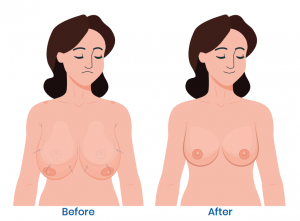
Reasons for Mammaplasty
Breast reduction may be recommended for both physical and psychological reasons. It can improve quality of life by reducing discomfort and enhancing self-esteem and body image. You may be a candidate if:
- You experience persistent physical symptoms due to large breasts
- Non-surgical treatments haven’t provided relief
- Your breast size affects your posture, mobility, or lifestyle
- You have realistic expectations and are in
good general health.
Preparing for Your Surgery
What to Tell Your Doctor
Inform your medical team if you:
- Are pregnant or breastfeeding
- Have any allergies (especially to anaesthesia or medications)
- Have a bleeding disorder or take blood-thinning medication
- Smoke or vape
- Have had previous breast surgery or biopsies.
Pre-Surgery Instructions
Do not eat or drink anything (except water) for at least six hours before your procedure.
You may need to stop certain medications. Always follow your surgeon’s advice.
You should stop smoking at least four weeks before and after surgery to aid healing.
You will sign a consent form after the procedure has been explained to you.
Arrange for someone to take you home and stay with you overnight.
Packing for the Hospital
On the day of your surgery, please bring:
- A list of all medications and allergies
- Comfortable, loose-fitting clothes
- A soft, supportive bra without underwire
- Government issued identification or health
insurance details.
Leave jewellery and valuables at home.
The Day of Your Surgery
This is what you can expect on the day of your surgery.
On Arrival
- Check in at the surgical admissions area.
- You will be asked to change into a hospital gown.
- A nurse will place an IV line for fluids and medication.
Before the Procedure
- You will meet your surgeon and anaesthetist.
- Your breasts may be marked to guide the surgery.
- You’ll receive a general anaesthetic and be asleep for the procedure.
The Surgery
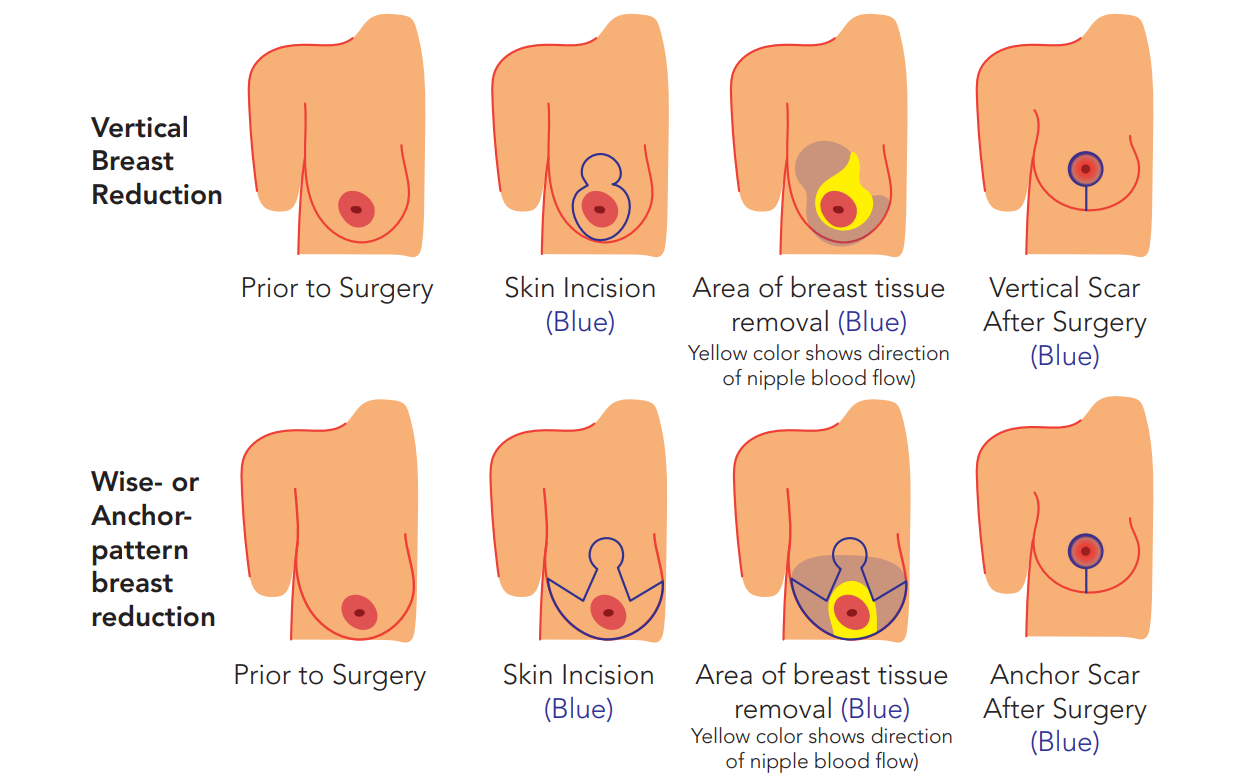
STEP 1: Incisions and Removal
- Your surgeon will make incisions based on your breast size and desired outcome.
- Excess tissue, fat, and skin will be removed.
- The nipples may be repositioned for a more
natural appearance.
STEP 2: Shaping and Closure
- The remaining breast tissue will be reshaped and the incisions closed with stitches.
- Dressings or surgical tape will be applied.

Recovery in Hospital
After the Operation
- You will be taken to a recovery area and monitored closely.
- You may have small tubes (drains) to remove excess fluid—these are temporary.
- Pain relief and antibiotics may be provided.
- Most patients stay in hospital overnight.
Caring for Yourself at Home
What to Expect
Here’s what you can expect as you recover at home.
Rest, take prescribed pain relief medication, and keep dressings dry. Avoid lifting your arms above shoulder height.
Bruising, swelling, and discomfort are normal. Wear your post-op bra as instructed.
Stitches may be removed or dissolve on their own. You may return to light daily activities.
Avoid strenuous activity, heavy lifting, and upper-body exercise. Full healing can take several weeks.
When to Seek Medical Attention
Contact your surgeon or seek urgent care if you notice:
- Significant or increasing swelling or bleeding
- High fever or chills
- Redness, warmth, or discharge at the incision sites
- Severe pain not controlled by medication
- Shortness of breath or chest pain.
Follow-Up Appointments
After surgery:
- You’ll have a review with your surgeon within 1–2 weeks. Any drains or dressings may be removed at this visit.
- Additional follow-ups may be scheduled to check healing and discuss results.
Frequently Asked Questions
Other Patient Pathway Posts
Pulmonary Embolism

What to Expect After a Head Injury

Recovering After A Concussion
How to Care for a Child Who Has Croup
Choking: What You Can Do to Help
Understanding Your Headache & When to Seek Help
Understanding Burns
Recognising the Red Flags of Cauda Equina Syndrome
Recovering After Cauda Equina Syndrome
Recovery From Back Pain