Your DTPA Renal Scan Journey
 Download PDF
Download PDF
Your DTPA Renal Scan Journey
Our goal is to ensure that you feel informed, comfortable, and supported throughout every step of the process. Should you have any questions or concerns, please do not hesitate to speak with your doctor or the nuclear medicine team.
What is a DTPA Renal Scan?
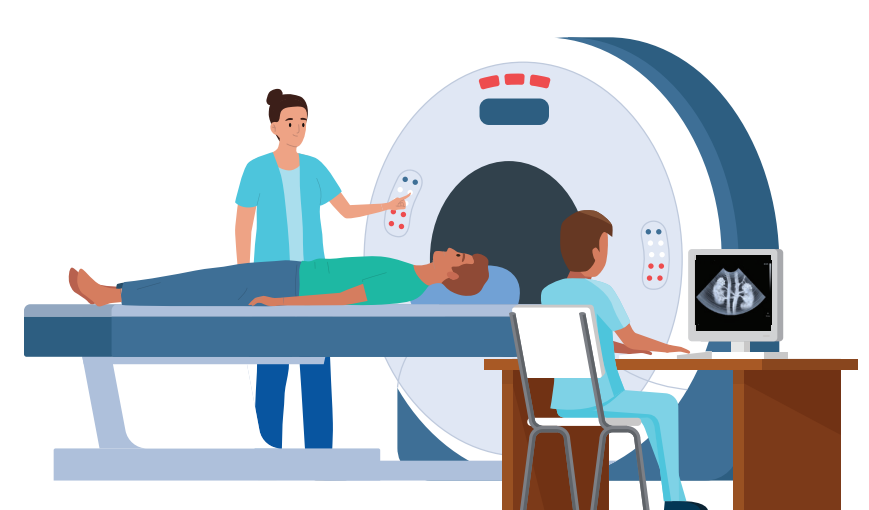
A DTPA Renal Scan is a nuclear medicine test that helps assess the function of your kidneys. The test involves injecting a small amount of a radioactive substance (DTPA) into your bloodstream. This substance is taken up by your kidneys, and a special camera (gamma camera) is used to capture images of how the kidneys are processing it. This allows us to observe how well your kidneys are working and how efficiently blood is being filtered.
Why You Might Need This Scan
Your doctor may recommend a DTPA Renal Scan to evaluate the following:
- Kidney function and overall health
- Renal blood flow and glomerular filtration rate (GFR)
- Potential blockages or obstructions in the kidneys or urinary tract
- Suspected kidney disease, such as kidney infection or damage from hypertension or diabetes
- Assessment of kidney function before or after a transplant.
How to Prepare for Your DTPA Renal Scan
Please follow these guidelines to ensure the test provides accurate results.
- Hydration: Drink plenty of fluids before the Scan to ensure your kidneys are functioning well.
- Fasting: You may be asked to refrain from eating for several hours before the Scan. Please follow the instructions provided by your doctor or the nuclear medicine team.
- Medications: Continue taking your regular medications unless advised otherwise. Please bring a list of your current medications to the appointment.
- Pregnancy: If you are pregnant or suspect you may be, please inform the team prior to the Scan.
What to Expect on the Day
Here’s what you can expect when you come to the hospital for your DTPA Renal Scan.
STEP 1: Arrival and Check-In
Please arrive 15 minutes early and check in at the front desk. A member of our nuclear medicine team will meet you and escort you to the nuclear medicine department.
STEP 2: Briefing
The procedure will be explained to you, and you’ll have the chance to ask any questions you may have.
STEP 3: IV Line and the Radiotracer
A nurse will insert an IV cannula into your arm for the injection of a small amount of radioactive tracer. This substance is safe, and you may feel a slight pinch during the injection.
STEP 4: Scanning
After the injection, you will be asked to lie on a table while the gamma camera takes pictures of your kidneys. The camera will be positioned over your abdomen, but it will not touch you. The Scan takes about 30–45 minutes, during which you need to remain still.
Post-Scan
Once the Scan is complete, a nurse will remove your IV line and you will be allowed to go home and resume normal activities. There are no specific restrictions after the procedure, so you can continue with your day as usual.
What Are the Risks of a DTPA Renal Scan?
The benefits of the test far outweigh the risks. The amount of radiation used in a DTPA Renal Scan is very small and is considered safe for most people. However, if you are pregnant or breastfeeding, please inform the nuclear medicine team beforehand so that they can
determine if the Scan is appropriate for you.
Frequently Asked Questions
Other Patient Pathway Posts
Pulmonary Embolism

What to Expect After a Head Injury

Recovering After A Concussion

How to Care for a Child Who Has Croup

Choking: What You Can Do to Help

Understanding Your Headache & When to Seek Help
Understanding Burns
Recognising the Red Flags of Cauda Equina Syndrome
Recovering After Cauda Equina Syndrome
Recovery From Back Pain