Your Electroencephalogram (EEG) Procedure
 Download PDF
Download PDF

Your Electroencephalogram (EEG) Procedure
We are here to support you with clear information and expert care. This booklet will guide you through the EEG procedure—what it is, why it’s done, how to prepare, and what to expect. If you have questions or concerns, please speak to your doctor or neurology team.
Understanding the Electroencephalogram (EEG)
An Electroencephalogram (EEG) is a safe, painless test that records the electrical activity of your brain using small electrodes placed on your scalp. The brain produces tiny electrical signals all the time. An EEG helps detect unusual patterns in this activity, which may suggest a condition affecting brain function.
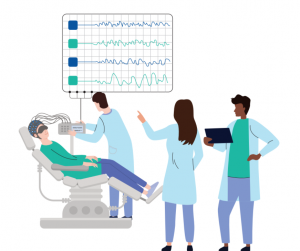
When an EEG May Be Needed
EEGs are used to:
- Investigate seizures or epilepsy
- Diagnose fainting or blackouts
- Monitor brain activity in sleep disorders
- Assess causes of confusion, memory problems, or head injuries
- Support diagnosis of neurological conditions.
Types of EEG
Depending on your symptoms, your doctor may order one of the following:
- Routine EEG: 40–60 minutes
- Sleep-deprived EEG: After you stay awake for part or all of the night
- Video EEG: With simultaneous video monitoring of your behaviour and brain activity
- During video EEG monitoring, a video camera is used to observe the patient and correlate any clinical seizures or movements with changes in brain activity.
How to Prepare for Your EEG
Please follow these instructions to help ensure
accurate results.
- Do not apply oils, creams, or hair products on the day of the Test.
- Eat as normal, but avoid excessive caffeine.
- Take your regular medications unless instructed otherwise.
- Bring a list of medications, especially those for seizures or psychiatric conditions.
- Let the staff know if you have any hair extensions or wigs that may affect electrode placement.
- If your Test is a sleep-deprived EEG (you may be asked to sleep less than usual), sleep as directed.
What to Expect on the Day of Your Test
1. Arrival and Preparation
- You’ll check in and be shown to the EEG room.
- A trained technologist will explain the procedure and answer any questions.
2. Electrode Placement
- Small flat metal discs (electrodes) will be attached to your scalp using a special adhesive or paste.
- The process is painless and takes about 10-15 minutes.
3. Recording
- You will be asked to lie still with your eyes closed at various times.
- You may be asked to breathe deeply and look at flashing lights.
- The Test typically lasts 40-60 minutes.
- The machine will record your brain’s electrical activity throughout.
4. After the Test
- The electrodes and paste will be removed.
- You may return to your normal activities immediately.
After the EEG
- There are no lasting side effects.
- Your hair may feel sticky from the paste but this can be washed out at home.
- The recording will be analysed by a neurologist.
- Your doctor will contact you to discuss the results and next steps.
Frequently Asked Questions
Other Patient Pathway Posts
Pulmonary Embolism
What to Expect After a Head Injury

Recovering After A Concussion

How to Care for a Child Who Has Croup

Choking: What You Can Do to Help
Understanding Your Headache & When to Seek Help
Understanding Burns
Recognising the Red Flags of Cauda Equina Syndrome
Recovering After Cauda Equina Syndrome
Recovery From Back Pain