Your Gastric Emptying Scan Journey
 Download PDF
Download PDF
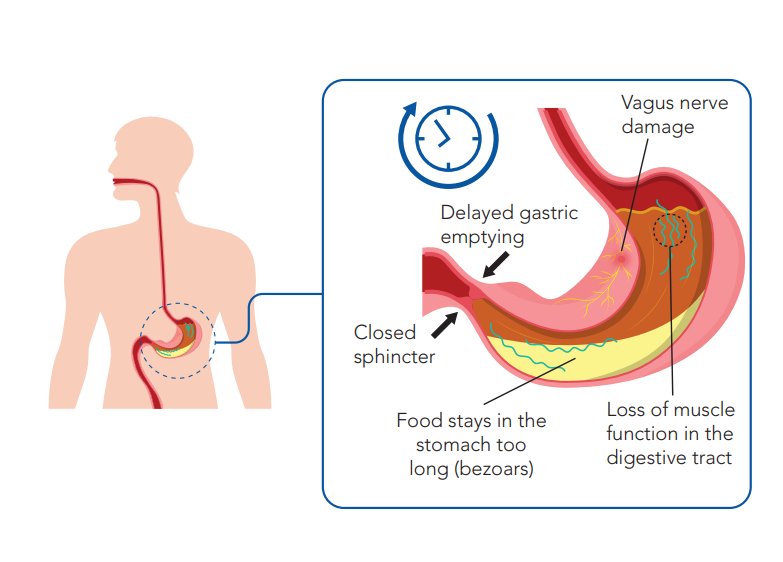
Your Gastric Emptying Scan Journey
We are here to ensure you feel informed, comfortable, and supported throughout your journey. If you have any questions, please speak with your doctor or the nuclear medicine team.
What is a Gastric Emptying Scan?
A Gastric Emptying Scan is a nuclear medicine test that shows how quickly food leaves your stomach. It can help diagnose gastroparesis (delayed stomach emptying), or other digestive issues that cause nausea, vomiting, bloating, or early fullness after meals. It involves eating a small meal containing a mild radioactive tracer and then undergoing imaging at regular intervals to track the movement of food through your stomach.
Why This Scan May Be Needed
Your doctor may request this Scan to investigate symptoms such as:
- Nausea or vomiting after eating
- Feeling full too soon
- Bloating or abdominal discomfort
- Unexplained weight loss
- Suspected gastroparesis or other motility disorders.
The results help guide diagnosis and management of digestive conditions.
How to Prepare for Your Scan
To ensure accurate results, please follow these instructions carefully:
- Fasting: Do not eat or drink anything for six hours before your appointment.
- Medications: Continue or stop medications only as directed by your doctor. Bring a full list of medications with you.
- Clothing: Wear comfortable clothing without metal around the waist or abdomen.
- Pregnancy/Breastfeeding: Please inform us if you are pregnant or breastfeeding.
Let the department know in advance if you have any food allergies or special dietary needs, especially if you are allergic to eggs or gluten.
What to Expect on the Day
STEP 1: Arrival and Check-In
Please arrive 15 minutes early and check in at the front desk. A member of our nuclear medicine team will meet you and escort you to the nuclear medicine department.
STEP 2: Briefing
The procedure will be explained to you, and you’ll have the chance to ask any questions you may have.
STEP 3: Eating the Test Meal
You will be given a standard meal (usually eggs or porridge with toast) that contains a very small amount of radioactive tracer. The meal is safe and carefully prepared to meet clinical standards.
STEP 4: Imaging
After eating, you will lie on a scanning bed while a gamma camera takes images of your stomach at specific intervals. These are usually:
- Immediately after eating
- 1 hour
- 2 hours
- 3 or 4 hours (depending on your hospital’s protocol).
STEP 5: During the Scan
- You’ll remain in the department for the duration of the test.
- You may be asked to remain seated or lie down between Scans.
- Please avoid eating or drinking during the Scan unless
instructed otherwise.
STEP 6: After the Scan
- You may return to your normal activities and eat as usual.
- Drink plenty of fluids to help flush the tracer from your system.
- The results will be sent to your referring doctor within a few days.
Frequently Asked Questions
Other Patient Pathway Posts
Pulmonary Embolism

What to Expect After a Head Injury

Recovering After A Concussion

How to Care for a Child Who Has Croup

Choking: What You Can Do to Help

Understanding Your Headache & When to Seek Help
Understanding Burns
Recognising the Red Flags of Cauda Equina Syndrome
Recovering After Cauda Equina Syndrome
Recovery From Back Pain