Your Myocardial Perfusion Scan Journey
 Download PDF
Download PDF
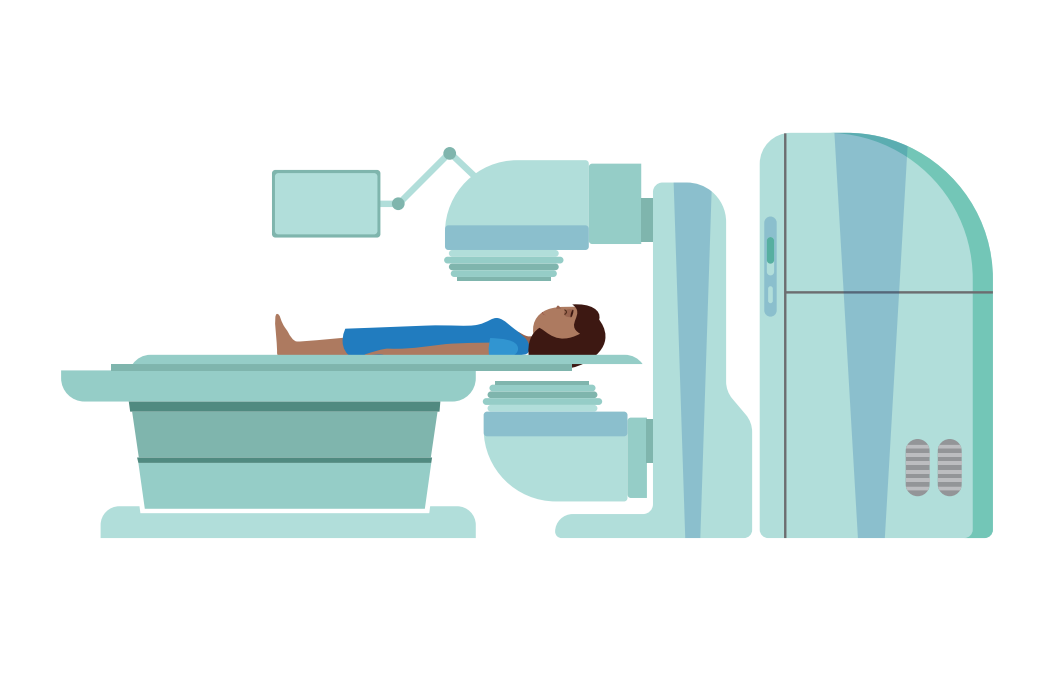
Your Myocardial Perfusion Scan Journey
This guide explains what to expect during your Myocardial Perfusion Scan (also known as a nuclear stress test or MPI Scan). Our goal is to ensure you feel informed, comfortable, and supported throughout your experience. If you have any questions, please speak with your doctor or the nuclear medicine team.
What is a Myocardial Perfusion Scan?
A Myocardial Perfusion Scan (MPI) is a non-invasive test that shows how well blood is reaching different parts of your heart muscle. It can also show how efficiently your heart is pumping.
The Scan involves two parts:
- One while your heart is at rest, and
- One while it is under stress (either through
exercise or medication).
A small amount of radioactive tracer is used to track blood flow, and a gamma camera takes detailed images of your heart.
Why This Scan May Be Needed
Your doctor may request an MPI Scan to:
- Investigate chest pain or breathlessness
- Diagnose coronary artery disease or poor blood flow
- Assess damage after a heart attack
- Evaluate heart function before or after surgery
- Monitor the effects of cardiac treatment or medications.
How to Prepare for Your Scan
To help ensure accurate results:
- Avoid caffeine (coffee, tea, cola, energy drinks, and chocolate) for 24 hours before the Test — it can interfere with the tracer.
- Do not eat or drink anything for at least 4 hours before your Test (small sips of water are allowed).
- Check with your doctor about any medications you may need to pause, especially beta-blockers or calcium channel blockers.
- Wear loose, comfortable clothing and shoes suitable for walking or exercise.
- Avoid wearing metal items such as underwired bras, jewellery, or belts.
- Inform us if you are pregnant, think you may be, or are breastfeeding.
- Bring a list of your current medications.
What to Expect on the Day
STEP 1: Arrival and Check-In
Please arrive 15 minutes early and check in at the front desk. A member of our nuclear medicine team will meet you and escort you to the nuclear medicine department.
STEP 2: Monitoring Setup
Electrodes (small stickers) will be placed on your chest, arms, and legs to monitor your heart rhythm with an ECG. A cuff will be placed on your arm to monitor your blood pressure.
STEP 3: IV Line and Tracer Injection
A nurse will insert an IV cannula into your arm
for the injection of a small amount of radioactive tracer, which travels to your heart muscle.
STEP 4: Stress Test
- You will either walk on a treadmill or be given a medication to simulate exercise if you are unable to walk (known as pharmacological stress).
- Medication may include adenosine, dipyridamole (Persantine), or dobutamine.
STEP 5: Imaging
- Once your heart reaches peak stress, you will receive a tracer injection and lie on the Scan table.
- A gamma camera will take detailed images of your heart. You will need to lie very still with your arms raised above your head for 10–30 minutes.
- After a break, a second set of images will be taken while your heart is at rest.
- The full procedure can take 4–5 hours, including waiting periods between Scans.
After Your Scan
- A nurse will remove your IV and you will be allowed to go home.
- You can eat and drink normally after the Scan unless advised otherwise.
- Drink plenty of fluids to help flush the tracer from your body.
- You may resume your normal activities, including driving, unless told otherwise.
- Your results will be reviewed by a specialist, and a report will be sent to your referring doctor.
Radiation Safety Information
Pregnancy and Breastfeeding
- If you are pregnant or breastfeeding, please contact us as soon as you receive your appointment.
- Some nuclear medicine procedures are not suitable during pregnancy or while breastfeeding.
Radiation Exposure
- The radiation dose is small and safe, similar to a CT Scan.
- A doctor has carefully reviewed your case and confirmed this is the most appropriate test.
- As a precaution, please avoid close, prolonged contact with young children and pregnant individuals for the remainder of the day.
Travel Advice
- Airports and ports may have radiation detectors.
- If travelling within 5 days of your Scan, please carry your appointment letter as documentation.
Bringing Someone With You
- You may bring a relative or friend, but they cannot accompany you into the Scan room.
- Please avoid bringing children, and companions must not be pregnant.
Frequently Asked Questions
Other Patient Pathway Posts
Pulmonary Embolism

What to Expect After a Head Injury

Recovering After A Concussion
How to Care for a Child Who Has Croup

Choking: What You Can Do to Help
Understanding Your Headache & When to Seek Help
Understanding Burns
Recognising the Red Flags of Cauda Equina Syndrome
Recovering After Cauda Equina Syndrome
Recovery From Back Pain