Your Ocrevus Infusion Therapy Experience
 Download PDF
Download PDF
Your Ocrevus Infusion Therapy Experience
We want to ensure that you receive the highest level of healthcare. This means keeping you educated and informed about what is involved in receiving Ocrevus Infusion Therapy. If you have any questions or concerns, please speak with your doctor or medical technician.
Understanding Ocrevus Infusion Therapy
Ocrevus (Ocrelizumab) is a prescription medication used to treat relapsing forms of multiple sclerosis (MS), including clinically isolated syndrome, relapsing-remitting MS, and active secondary progressive MS in adults. It is also approved for use in adults with primary progressive MS. Ocrevus works by targeting and reducing specific B cells in the immune system. These B cells are believed to play a role in the immune attack on myelin – the protective sheath that surrounds nerve fibres in the brain and spinal cord. By reducing these B cells, Ocrevus helps slow the progression of MS and decrease disease activity.
How Is Ocrevus Infusion Therapy Given?
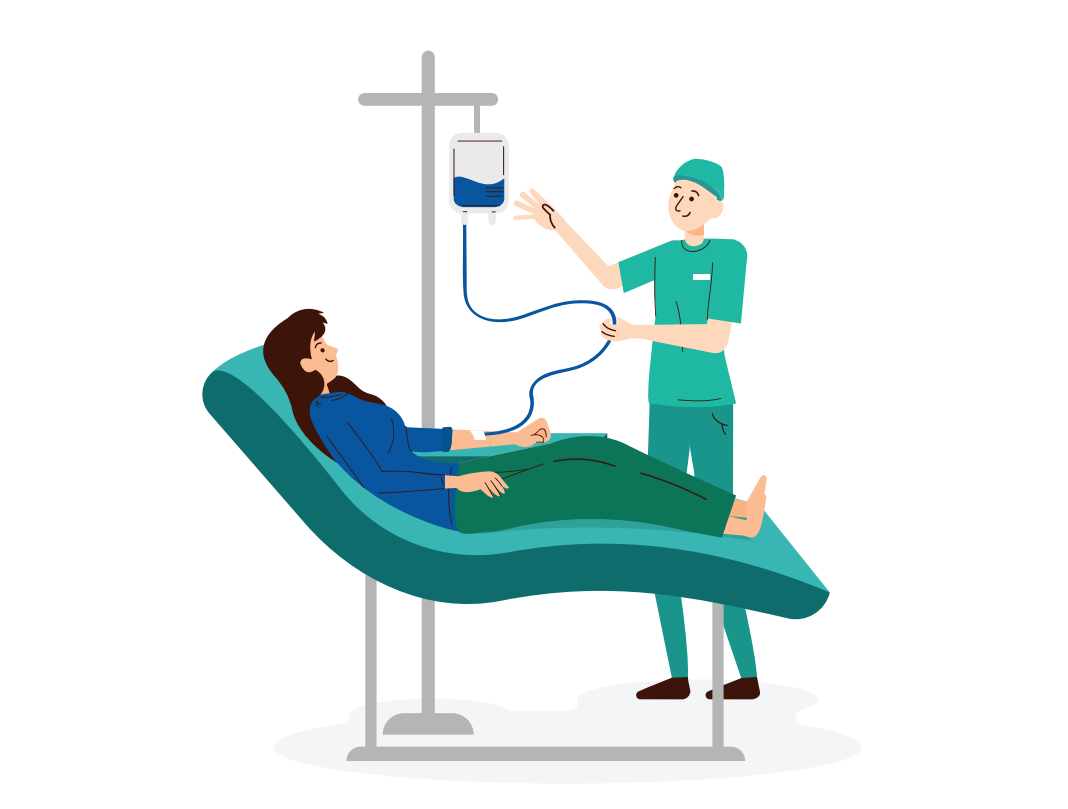
Ocrevus is administered as an intravenous (IV) infusion, meaning it is given directly into a vein through an IV line, usually in your arm.
The dosing schedule is as follows:
- First dose: split into two infusions, given two weeks apart
- Subsequent doses: one infusion every six months, assuming no adverse reactions.
Each infusion is provided in a clinical setting such as a hospital or infusion centre, under medical supervision.
Preparing for Your Ocrevus Infusion
Bear the following in mind in preparation for your Ocrevus Infusion appointment:
- Arrive early: Please plan to arrive 15 minutes before your scheduled admission time.
- Arrange transport: You will be at the hospital for approximately 4–6 hours, so it is recommended that you arrange for someone to drive you home afterward.
- Bring comfort items: Feel free to bring a pillow, blanket, book, tablet, snacks, and water to help make your experience as comfortable as possible.
- Dress in layers: Infusion rooms may vary in
temperature. Dressing in layers will help you stay comfortable throughout your treatment.
The Day of the Procedure
Here is what to expect on the day of your infusion.
STEP 1: Arrival and Check-in
When you arrive at Health City, check in at reception. A staff member will be there to greet and assist you.
STEP 2: Escort to the Infusion Room
A Health City team member will accompany you to the infusion room, where you will receive your treatment.
STEP 3: Pre-Infusion (30–60 minutes)
A nurse will:
- Take your vital signs (blood pressure, pulse, oxygen levels);
- Insert an IV line into your arm; and
- Administer pre-medications (including corticosteroids, antihistamines, and antipyretics) to help reduce the risk of infusion reactions.
STEP 4: During the Infusion
You will be seated or lying comfortably during the infusion. If any reaction occurs, the infusion may be slowed or paused as necessary.
- First dose: split into two sessions, each lasting approximately 2 hours
- Subsequent doses: last between 2–4 hours, depending on how well you tolerate the treatment
STEP 5: Post-Infusion Monitoring (1 hour)
After your infusion, you will be monitored for at least one hour to watch for side effects or any delayed reactions. Once cleared by your nurse, you will be allowed to go home. It is essential to call Health City if you experience any concerning symptoms within 24 hours of your infusion.
Possible Side Effects
Common Infusion Reactions
Infusion reactions are relatively common with Ocrevus, particularly with the first dose. Most are mild to moderate, but some can be serious. Contact Health City immediately if you experience:
- Itchy skin, rash, or hives
- Fatigue or tiredness
- Coughing or wheezing
- Shortness of breath or difficulty breathing
- Throat irritation or pain
- Flushing (redness of the face)
- Fever (38°C/100.4°F or higher)
- Nausea
- Headache
- Swelling of the throat
- Dizziness or faintness
- Rapid heartbeat (over 100 beats per minute).
Serious Side Effects
In rare cases, Ocrevus may lead to more serious health issues.
- Increased risk of cancer, particularly breast cancer. Discuss any personal or family history of cancer with your doctor
- Colitis (inflammation of the colon): Watch for:
- Diarrhoea or frequent bowel movements
- Blood or mucus in stool
- Black or tarry stools
- Severe abdominal pain
- Increased risk of infection – Ocrevus can weaken your immune system, resulting in:
- Respiratory tract infections (cough, fever, chills)
- Skin or herpes infections (cold sores, shingles, genital sores, rash)
- Severe herpes symptoms – changes in vision, eye redness or pain, persistent headache, stiff neck, confusion
- Hepatitis B reactivation – if you’ve previously had Hepatitis B, the virus could reactivate. A blood test will be done prior to starting therapy.
- Progressive Multifocal Leukoencephalopathy (PML) – a rare brain infection that can cause severe disability
or death. Symptoms include:- Worsening memory or thinking
- Vision changes
- Loss of strength or coordination
- Weakness on one side of the body
- Decreased immunoglobulins – your immune system proteins may reduce over time. Regular blood tests will monitor your levels throughout treatment.
Frequently Asked Questions
Other Patient Pathway Posts
Pulmonary Embolism

What to Expect After a Head Injury

Recovering After A Concussion
How to Care for a Child Who Has Croup

Choking: What You Can Do to Help
Understanding Your Headache & When to Seek Help
Understanding Burns
Recognising the Red Flags of Cauda Equina Syndrome
Recovering After Cauda Equina Syndrome
Recovery From Back Pain