Your PET Scan Experience
 Download PDF
Download PDF

Your PET Scan Experience
We want to ensure that you receive the highest level of healthcare. This means keeping you educated and informed about what is involved in the different stages of your PET Scan imaging procedure. If you have any questions or concerns, please speak with your doctor or medical technician.
What is a PET Scan?
A Positron Emission Tomography (PET) Scan is a diagnostic imaging test that provides insights into the metabolic and biochemical functions (blood flow, oxygen and sugar metabolism) of tissues and organs by utilising a radioactive tracer.
The tracer is usually administered via an intravenous injection in your hand or arm. It accumulates in areas with elevated metabolic activity, aiding in the localisation of potential diseases such as cancer. PET images are often fused with CT or MRI Scans to enhance diagnostic accuracy. At Health City, we offer integrated PET-CT Scanning services.
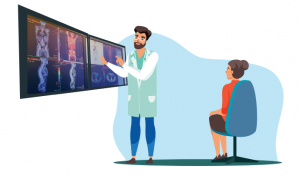
Why is a PET Scan Needed?
A PET Scan is an effective way to help discover a variety of conditions, including cancer, heart disease and brain disorders. Your healthcare provider can use this information to help diagnose, monitor or treat your condition.
What Are the Risks of a PET Scan?
For your PET Scan, a radioactive drug called a tracer will be injected into a vein. The amount of radiation you’re exposed to in the tracer is small, so the risk of negative effects from the radiation is low. However, the tracer might:
- Expose your unborn baby to radiation if you are pregnant, or
- Expose your child to radiation if you are breastfeeding.
You are advised not to be around pregnant women or children for 24 hours after your Scan.
Who Will Be Involved in the PET Scan?
Your PET Scan will include a few team members. They are:
- A Radiology Technician who will assist you onto the scanning table, position you correctly and start the PET Scan, as well as monitor your safety throughout the procedure;
- A Radiologist, the Medical Doctor who will report on the PET Scan; and
- A Nurse who will assist the team at any point and insert an IV cannula for your radioactive tracer.
Preparing for Your PET Scan
You are advised not to eat or drink anything except water
or prescribed medicines for six hours before a PET Scan.
Your last meal before the Scan should include high-protein foods and plenty of water. It is advisable to avoid carbohydrates and foods with sugar and not exercise for 24 hours before your PET Scan, as this could affect the results.
If you are diabetic, please inform the team when your PET Scan is booked. Do not have any of your diabetic medications on the morning of the appointment. You may take your other medications.
If you have had previous scans (PET, PETCT, MRI or CT), please ensure you give these to your medical team prior to your PET Scan so that they can be used for comparison.
This is what you can expect when you come to Health City at Camana Bay for a PET Scan.
When you arrive at Health City at Camana Bay, it is best to park on the west side of the hospital near the bypass, as you will be exiting the diagnostic area at the back of the hospital. If someone is dropping you off, please ask them to collect you from the parking area. Your appointment will take anywhere from one to two and a half hours.
STEP 1 You will check in at the reception desk for
your appointment.
STEP 2 A member of the radiology team will escort you to the PET-CT diagnostic wing.
STEP 3 You will be instructed to change into a patient gown and remove any items that may contain metal.
- All jewellery, including watches
- Eyeglasses
- Hairpins/Barrettes containing metal
- Dentures
- Hearing aids
- Underwire bras
It is best to leave your valuables at home but there is a locker for your items at Health City at Camana Bay if needed.
STEP 4 The radiology technician will ask you to sit in the PET Scan radioactive tracing administering area to read and sign documentation including consent for the PET Scan.
The nurse will insert an IV cannula and check your blood glucose (sugar). Once your blood sugar is determined to be within range for the exam, the technologist will give an injection of the radioactive medication that is needed for the images.
STEP 5 You will need to wait 30-60 minutes for the tracer to circulate through the body. You will be asked not to move and will be monitored by the staff to ensure your compliance and safety. Depending on your situation, you may be asked to drink a barium drink as well during this time; you will be informed of this before your appointment.
STEP 6 You may be asked to empty your bladder before the Scan.
STEP 7 You will be assisted onto the scanning table that moves through the PET scanner. The Scan itself is typically painless and takes about 30 to 60 minutes. The PET scanner looks like a thick, giant ring. There is an X-ray source within the wall of the scanner and X-ray detectors on the other side.
The X-ray within the ring rotates around your body, emitting thin X-ray beams that are detected by the X-ray detectors. The computer makes several cross-sectional images of the part of your body being investigated. The PET scanner can be a bit noisy but that’s just the movement of the machine. It’s very important to remain still during the test, as movement could affect the results of the PET Scan.
Once the imaging has been completed, the radiology team member will assist you off the scanning table.
STEP 8 You may get changed, use the bathroom in the PET department, and collect your belongings.
STEP 9 You will be escorted to the exit at the back of the hospital and your car. After the Scan, a nuclear medicine physician analyses the images and prepares a report. The results are sent to the referring physician, who will discuss them with you.
Frequently Asked Questions
Other Patient Pathway Posts
Pulmonary Embolism

What to Expect After a Head Injury

Recovering After A Concussion
How to Care for a Child Who Has Croup

Choking: What You Can Do to Help
Understanding Your Headache & When to Seek Help
Understanding Burns
Recognising the Red Flags of Cauda Equina Syndrome
Recovering After Cauda Equina Syndrome
Recovery From Back Pain