Your Tilt Table Test
 Download PDF
Download PDF
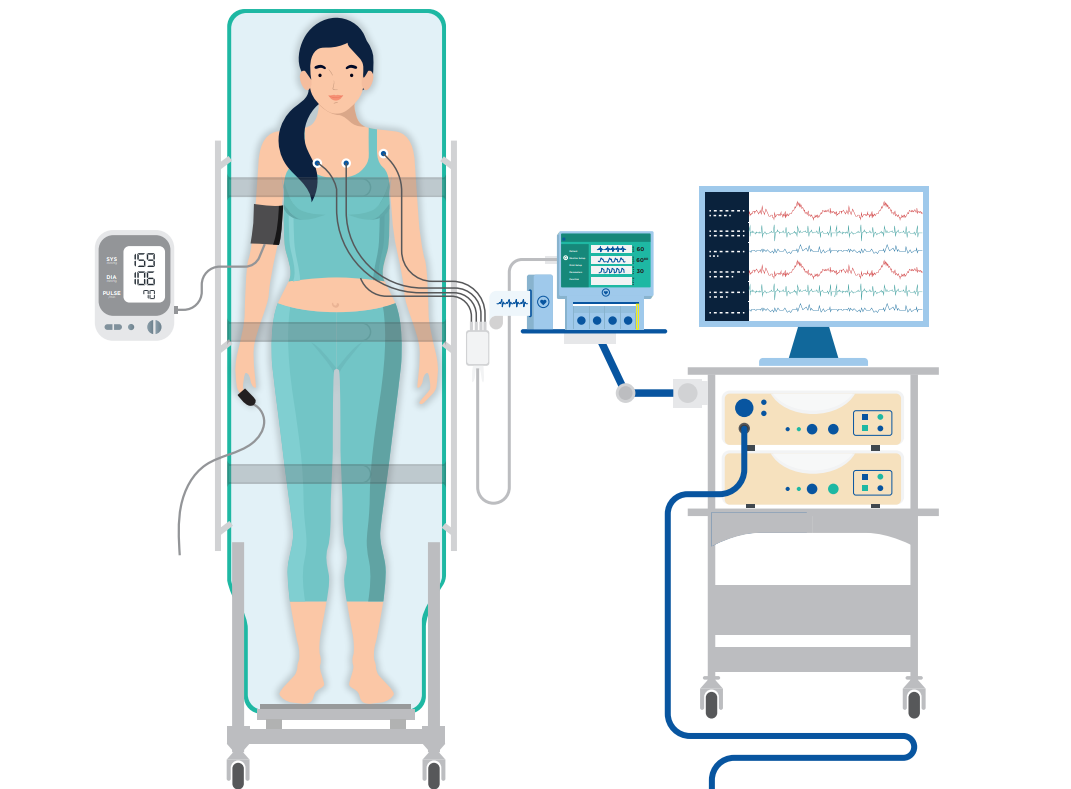
Your Tilt Table Test
We want to ensure that you receive the highest level of healthcare. This means keeping you educated and informed about what is involved in the different stages of your diagnostic procedure. If you have any questions or concerns, please speak with your doctor or medical technician.
Understanding a Tilt Table Test
A Tilt Table Test is a diagnostic procedure used to determine the cause of unexplained fainting, known as syncope. It evaluates how your body responds to changes in position, especially when moving from lying down to standing up. This Test helps diagnose conditions such as vasovagal syncope, orthostatic hypotension, and other autonomic nervous system disorders. The procedure involves lying on a special table that tilts you at various angles while your heart rate, blood pressure, and symptoms are monitored.
How to Prepare for Your Tilt Table Test
- Avoid eating or drinking for at least 4–6 hours before the Test.
- Avoid caffeinated beverages and alcohol for 24 hours prior to the procedure.
- Wear comfortable, loose-fitting clothing.
- Take your medications as advised by your doctor; some may need to be paused before the Test.
- Arrange for someone to drive you home afterward, as you may feel weak or light-headed.
The Day of the Procedure
Please arrive on time for your appointment. Inform the team if you feel unwell or have any new symptoms. Follow any instructions given regarding your usual medications. You may be asked to remove jewellery or items that could interfere with monitoring equipment.
What to Expect During the Tilt Table Test
These are the steps you will go through when you come to the hospital for your Tilt Table Test.
STEP 1
You will be taken to a quiet room and asked to lie on a special table. ECG electrodes will be placed on your chest to monitor your heart, and a cuff will be placed on your arm to measure blood pressure. An IV line may be inserted in case medication is needed during the Test.
STEP 2
The Test begins with a resting period where you will lie flat for 5–10 minutes. This allows for a baseline reading of your vital signs.
STEP 3
The table will slowly be tilted upward, usually to a 60–70 degree angle, simulating standing. You will remain in this position for about 20–45 minutes while your heart rate, blood pressure, and symptoms are closely monitored.
STEP 4
If no symptoms occur, your doctor may administer a medication (such as isoproterenol or nitroglycerin) to provoke a response. You will continue to be monitored for changes in heart rhythm or blood pressure.
STEP 5
If you faint or feel unwell, the table will be returned to a flat position immediately, and you will be monitored as you recover. The Test typically lasts 30–60 minutes but may be extended if symptoms need to be induced and studied.
Recovering from a Tilt Table Test
Aftercare: Most patients recover quickly. You will be monitored for a short period before being discharged.
- Hydration: Drink water after the Test unless advised otherwise to help stabilise your blood pressure.
- Rest: Avoid strenuous activity for the rest of the day.
- Driving: Do not drive yourself home; you may feel tired or dizzy.
- Follow-up: Your doctor will discuss your results with you at a later date or in a follow-up appointment.
Follow-up Appointments
Your results will be reviewed by your referring physician or cardiologist. A follow-up appointment will be arranged to discuss your diagnosis and the next steps in your treatment plan. Please bring any questions or concerns
to this appointment.
Frequently Asked Questions
Other Patient Pathway Posts
Pulmonary Embolism

What to Expect After a Head Injury

Recovering After A Concussion

How to Care for a Child Who Has Croup

Choking: What You Can Do to Help

Understanding Your Headache & When to Seek Help
Understanding Burns
Recognising the Red Flags of Cauda Equina Syndrome
Recovering After Cauda Equina Syndrome
Recovery From Back Pain