Your Meckel’s Diverticulum Scan Journey
 Download PDF
Download PDF
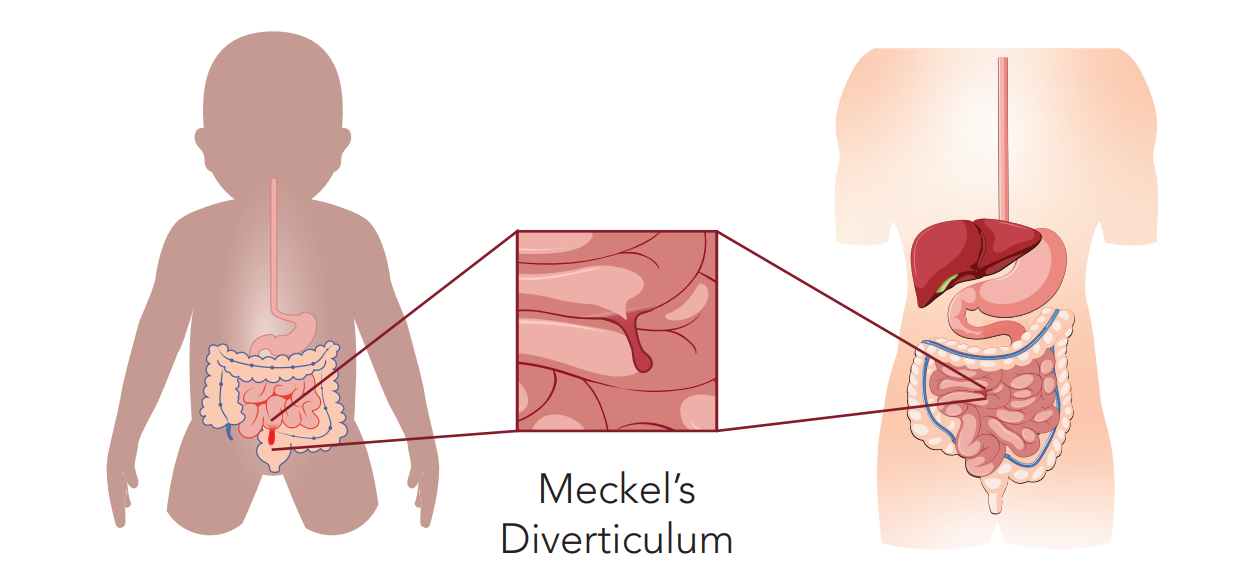
Your Meckel’s Diverticulum Scan Journey
We are committed to the highest standard of care and aim to make you feel informed, comfortable, and supported throughout your visit. If you have any questions, please speak with your doctor or the nuclear medicine team.
What is a Meckel’s Diverticulum Scan?
A Meckel’s Scan detects the presence of Meckel’s diverticulum, a small pouch in the wall of the small intestine that can contain stomach-like tissue. This tissue may secrete acid and cause bleeding, especially in children and young adults.
The Scan uses a small amount of radioactive tracer (technetium-99m pertechnetate) that is absorbed by stomach tissue. If stomach tissue is present in the diverticulum, it will show up on the Scan.
Why This Scan May Be Needed
Your doctor may refer you for a Meckel’s Scan if you or your child has:
- Unexplained gastrointestinal bleeding
- Abdominal pain
- Suspected Meckel’s diverticulum
- Blood in the stool (especially in children)
- Anaemia of unclear cause.
This Scan is especially useful when other imaging or investigations have not revealed the source of bleeding.
How to Prepare for Your Scan
Please follow these guidelines for the most accurate results:
- Fasting: Do not eat or drink for 4–6 hours before the Scan (check your appointment letter for specifics).
- Medications: Some medications may interfere with the Scan. Inform your doctor or the nuclear medicine team if you or your child take:
- Antacids
- Steroids
- Certain stomach medications
(e.g., ranitidine, omeprazole)
- Bring a medication list with you.
- Pregnancy/Breastfeeding: Inform us if the patient is pregnant or breastfeeding.
- For young children, you may be asked to bring a bottle, snack, toy, or comfort item for after the Test.
What to Expect on the Day
STEP 1: Arrival and Check-In
Please arrive 15 minutes early and check in at the front desk. A member of our nuclear medicine team will meet you and escort you to the nuclear medicine department.
STEP 2: IV Line and Tracer Injection
A nurse will insert an IV cannula into your arm for the injection of a small amount of radioactive tracer.
STEP 3: Imaging
- You or your child will lie still on a scanning bed for approximately 30–60 minutes.
- A gamma camera will take continuous images of the abdomen to track where the tracer goes.
- It is important to stay as still as possible during the Scan. Sedation is not usually needed but can be discussed if necessary for very young children.
STEP 4 After the Scan
- You may eat and drink as normal.
- No special precautions are needed.
- Encourage plenty of fluids to help clear the tracer from the body.
- Results will be sent to your referring doctor within a few days.
Frequently Asked Questions
Other Patient Pathway Posts
Pulmonary Embolism

What to Expect After a Head Injury

Recovering After A Concussion

How to Care for a Child Who Has Croup

Choking: What You Can Do to Help

Understanding Your Headache & When to Seek Help
Understanding Burns
Recognising the Red Flags of Cauda Equina Syndrome
Recovering After Cauda Equina Syndrome

Recovery From Back Pain